

Color matching with extensions: how to do it right
Color matching in extensions is the process of matching the shade of your extensions as closely as possible to your own hair so they don’t appear as a separate layer but fully blend into your natural look. The role of color matching in extensions is bigger than most women expect: a difference of just one shade is already visible, especially in the mid-lengths and ends where the blend is most noticeable. Anyone who buys extensions without first properly comparing the color risks a result that stands out rather than convinces. This article explains how to avoid that, step by step.
What is the role of color matching in extensions?
Color matching is the first and most crucial part of a successful extension application. Color is the first thing someone notices when extensions don’t blend well. Not the thickness, not the texture, but the color. This immediately shows the importance of color matching with extensions: a mismatch stands out right away, a good match makes the extensions invisible.
What many women underestimate is that natural hair rarely has just one single color. Hair almost always contains multiple shades at once: a slightly darker base at the roots, lighter highlights through the length, and sometimes a warmer or cooler tone at the ends due to sunlight or previous coloring. One color number is therefore rarely enough to make a convincing match. This is exactly why multi-tonal extensions have become so popular.
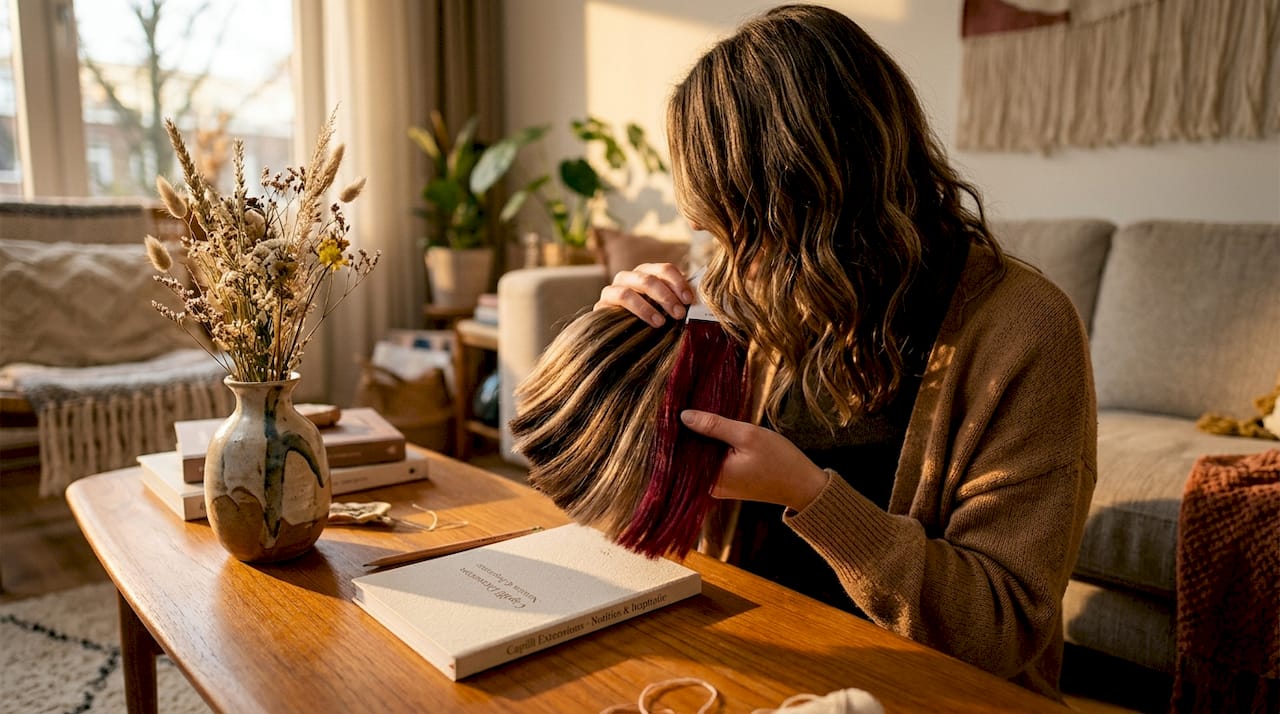
The areas that matter most in color matching are the mid-lengths and ends. The roots are less visible because extensions there are covered by your own hair. The color in the mid-lengths and ends determines the final result more than any other part. This means that when choosing your color, you should always look at how your hair looks halfway down the length, not just at the roots.
Concrete situations where color matching makes a difference:
- Your hair has a warm, golden blonde shade but you choose ash blonde extensions. The contrast is immediately visible at the ends.
- Your hair has balayage with light strands. A solid extension in one shade stands out like a block of color next to the smooth transition of your own hair.
- Your hair is dark brown with subtle highlights. Extensions in a slightly too light shade create a striped effect instead of a natural blend.
Each of these situations can be avoided with the right approach, which we explain in the following sections.
How do you choose the right color for your hair?
Choosing the right color for extensions doesn’t start with a color chart on a screen, but with your own hair in daylight. Artificial light distorts colors strongly: what looks warm and golden blonde in a store or bathroom can appear orange or ash gray in daylight. Always hold your hair in daylight next to a color sample to make a fair comparison.
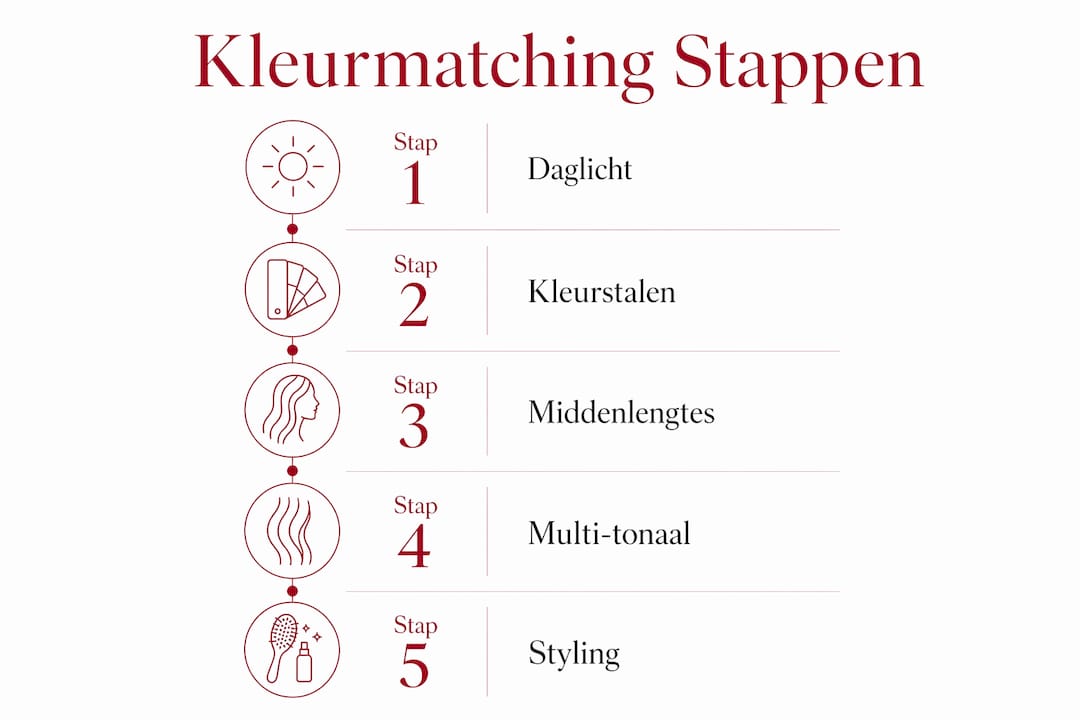
The most reliable method is using physical color samples. Color samples and swatches give you the opportunity to hold the color directly next to your own hair and see how they blend in different lighting conditions. This is a step you never want to skip, especially if your hair has multiple shades.
When choosing your color, the following practical guidelines apply:
- Look at the color in your mid-lengths and ends, not at the roots. This is the area visible next to the extensions.
- Does your hair have highlights or balayage? Then choose a multi-tonal set that combines several shades, instead of one solid color.
- Unsure between two shades? Choose the slightly lighter option. Light extensions are less noticeable than too dark ones and are easier to blend.
- Always compare in daylight, preferably outside or next to a window.
- Order an color ring XL if you regularly wear extensions. This way you always have a reference at hand.
Pro tip: Photograph your hair in daylight and compare the photo with the color samples. A photo lets you look more objectively than when you stand in front of a mirror, because you are less likely to convince yourself that a color is right when it actually isn’t quite correct.
Women with dyed hair or balayage should consult their hairdresser before ordering extensions. A hairdresser can instantly see which shades are in your hair and advise which color number or combination fits best.
Real hair or synthetic: what does that mean for color matching?
The material of your extensions largely determines how much leeway you have in color matching. Real hair extensions and synthetic extensions behave fundamentally differently when it comes to color.
Real hair extensions can be dyed carefully, which means you can still adjust afterward if the color isn’t quite right. This offers more flexibility, but it’s not a free pass to neglect color matching. Dyeing always damages the hair to some extent, and with extensions that are already processed, the risk is greater than with your own hair. Always have dyeing done by a professional, and test the color first on a small strand before treating the entire set.
Synthetic extensions are a different story. Synthetic hair does not absorb dyes, which means the color you buy is the color you keep. Attempts to dye synthetic extensions lead to color spots, damaged fibers, or in the worst case, melting hair structures. This makes the color choice beforehand even more critical for synthetic extensions than for real hair.
“Synthetic extensions cannot be safely dyed. Professionals advise carefully comparing color samples beforehand and discourage post-treatments to prevent color spots and damage.” Source: Hairrr
The practical advice is simple: when it comes to synthetic extensions, invest extra time in color selection beforehand. Order color samples, compare them in daylight, and be critical. With real hair extensions, you have a bit more room for correction, but even here, a good match beforehand is always better than a dye treatment afterward.
How do you naturally blend different color tones?
Hair with multiple tones, such as balayage, highlights, or regrowth, requires a specific approach to color matching. A single solid extension color rarely works here. The solution lies in multi-tonal sets that mimic the dimension of your own hair.
Multi-tonal extension sets contain multiple shades that together provide depth and movement, similar to how highlights and balayage work in colored hair. They look more natural than solid sets because they better mimic the light reflection of real hair. Manufacturers offer sets with different shades that imitate a natural hair structure, making blending significantly easier.
Here is a comparison of the two most commonly used approaches:
| Approach | Suitable for | Result |
|---|---|---|
| Solid color (one shade) | Hair without highlights, evenly dyed hair | Good for perfect color match, risk of block color effect |
| Multi-tonal set (multiple shades) | Hair with balayage, highlights, or regrowth | More natural blend, more depth and movement |
Besides the color choice itself, styling also plays a role in blending. Extensions that are cut or layered after placement blend better with your own hair. A hairdresser can thin out the ends of the extensions slightly to make the transition smoother. This is a small adjustment with a big effect on the final result.
Pro tip: Use a curling iron or blow dryer to style your own hair and the extensions together after placement. Heat helps the textures blend and makes small color differences less visible. Always use a heat protection spray, especially on real hair extensions.
The eye naturally focuses on the areas around the face and mid-lengths in a hair look. Make sure the color in those zones matches your own hair the most. Small differences in the back layers or inside are hardly noticeable.
How do you keep the color match good over time?
A perfect color match at purchase is the start, but not a guarantee for the long term. Extensions fade faster than your own hair, especially with frequent heat use or exposure to sun and chlorine. Good care is the key to a long-lasting, consistent color.
Follow these steps to maintain your color match as long as possible:
- Use sulfate-free shampoo and conditioner on your extensions. Sulfates strip color pigments from the hair and speed up fading.
- Limit the use of heat. Blow drying and flat irons at high temperatures damage the hair cuticles and make the color duller and more faded.
- Protect your extensions from sun and chlorine. Wear a hat or use a UV protection spray during prolonged sun exposure.
- Store clip-in extensions in a dry, dark place when not wearing them. Light and moisture damage the color.
- Always have any color corrections done by a professional. Expertise and high-quality pigments from professional color brands ensure natural, long-lasting results with less hair damage.
When you notice your extensions becoming lighter or duller while your own hair does not, it’s time to evaluate whether the color still matches. Sometimes it’s wiser to order new extensions than to try to adjust the color with a dye treatment. See the care tips from Capilli extensions for a complete overview of how to keep your extensions in top condition.
Key insights
Color matching with extensions only succeeds if you choose the right tone based on your mid-lengths and ends, with a multi-tonal approach for hair with highlights or balayage.
| Point | Details |
|---|---|
| Color determines everything | A color mismatch is immediately noticeable, before structure or thickness. |
| Mid-lengths are crucial | Choose your color based on the tone in your mid-lengths, not at the roots. |
| Multi-tonal works better | Hair with highlights or balayage requires a set with multiple shades for a natural blend. |
| Synthetic cannot be dyed | With synthetic extensions, the color choice is final upfront. Color samples are indispensable. |
| Care preserves the match | Sulfate-free products and limited heat use keep the color consistent longer. |
Why color matching is more than just consulting a color chart
I see it regularly: women who carefully choose an extension color based on a photo or an online color chart, then are disappointed when the result doesn’t match. The problem is not the extensions. The problem is that a screen never shows the true color of hair, and most women underestimate the complexity of their own hair color.
What I have learned in practice is that almost no one has truly uniform hair. Even women who think they have “just brown hair” actually have a warm undertone at the roots, slightly lighter ends from the sun, and maybe a few gray hairs that affect the tone. A set of extensions in one color can never match that.
The most successful color matches I have seen are always the result of two things: physical color samples compared in daylight, and a conscious choice for a multi-tonal set instead of a single color number. Women who take that step are almost always satisfied. Women who rely on an online photo are gambling.
My honest advice: pay as much attention to the color choice as to the type of extension. A perfect clip-in in the wrong color is worth less than a good match in a simpler model. The color is what people see. Everything else is detail.
— Jacky
Find your perfect color match with Capilli extensions
Capilli extensions offers a wide range of premium real hair extensions in dozens of colors, including multi-tonal sets specially composed for hair with highlights and balayage. Each set is made from 100% human Remy hair, ethically sourced and of the highest quality. Unsure which color suits your hair best? Capilli extensions offers a free color consultation where you receive personal advice based on your hair type and color. View the full range and find your match in the extension collection.
FAQ
Why do my extensions stand out even though the color seems right?
The color in the mid-lengths and ends determines the visibility of extensions, not the color at the roots. If you selected color based on your root color, a visible contrast may still appear in the most noticeable areas.
Can I dye real hair extensions if the color is not quite right?
Real hair extensions can be carefully dyed, but this must always be done by a professional and tested in advance on a small strand. Dyeing damages the hair and is not a substitute for a good color choice beforehand.
What are multi-tonal extensions and when do I need them?
Multi-tonal extensions contain multiple shades in one set and mimic the dimension of hair with highlights or balayage. They are most suitable for women whose hair is not a uniform color, which applies to most women.
How do I use color swatches for the best match?
Hold the color swatches in daylight next to your hair, specifically next to the mid-lengths and ends. Compare several shades at once and choose the color that most closely matches the tone halfway down your hair length. Capilli extensions offers color samples so you can compare at home.
How long does the color match stay good after purchase?
With the right care, sulfate-free products, and limited heat use, the color of real hair extensions remains consistent for several months. Exposure to sun, chlorine, and frequent heat use accelerates fading and can disrupt the match.