

Hair Extensions Beginners Checklist: Starting Safely
A hair extensions beginners checklist is the difference between a beautiful, natural result and unnecessary hair damage. Choosing the right extensions starts with your hair type, lifestyle, and the method that suits you. Whether you choose clip-ins, tape-ins, or keratin bonds, each method requires a different approach and care. This guide gives you step-by-step insight into the most popular extension methods, how to match color and texture, and how to keep your hair healthy. This way, as a beginner, you make a conscious choice that protects your hair and enhances your look.
1. Which types of hair extensions are suitable for beginners?
The most used extension methods are clip-ins, tape-ins, sew-ins, and keratin bonds. Each method has different wearing comfort, lifespan, and risk profile. As a beginner, it’s smart to know what you’re choosing before making an appointment or ordering a product.
Clip-in extensions are the most accessible choice for beginners. They are suitable for home use for every hair type and do not require professional application. You attach them yourself in minutes and remove them every evening, which keeps the strain on your own hair minimal.
Tape-ins, sew-ins, and keratin bonds usually require professional application due to complexity and risk of hair damage. Keratin bonds last 3 to 5 months and must be applied and removed by a certified stylist. Sew-ins are the heaviest on the hair and are not recommended for fine or damaged hair.
-
Clip-ins: ideal for beginners, no professional help needed, removable daily
-
Tape-ins: flat and invisible, professional application required, touch-up every 6 to 8 weeks
-
Keratin bonds: long-lasting result, high cost, only for healthy and strong hair
-
Sew-ins: maximum volume, heavy on the hairline, not recommended for fine hair
Pro tip: Start with clip-in extensions if you have never worn extensions before. This way you learn how extensions feel and how to care for them, without a long-term commitment or risk of damage.
2. How do you choose the right extensions for your hair type?
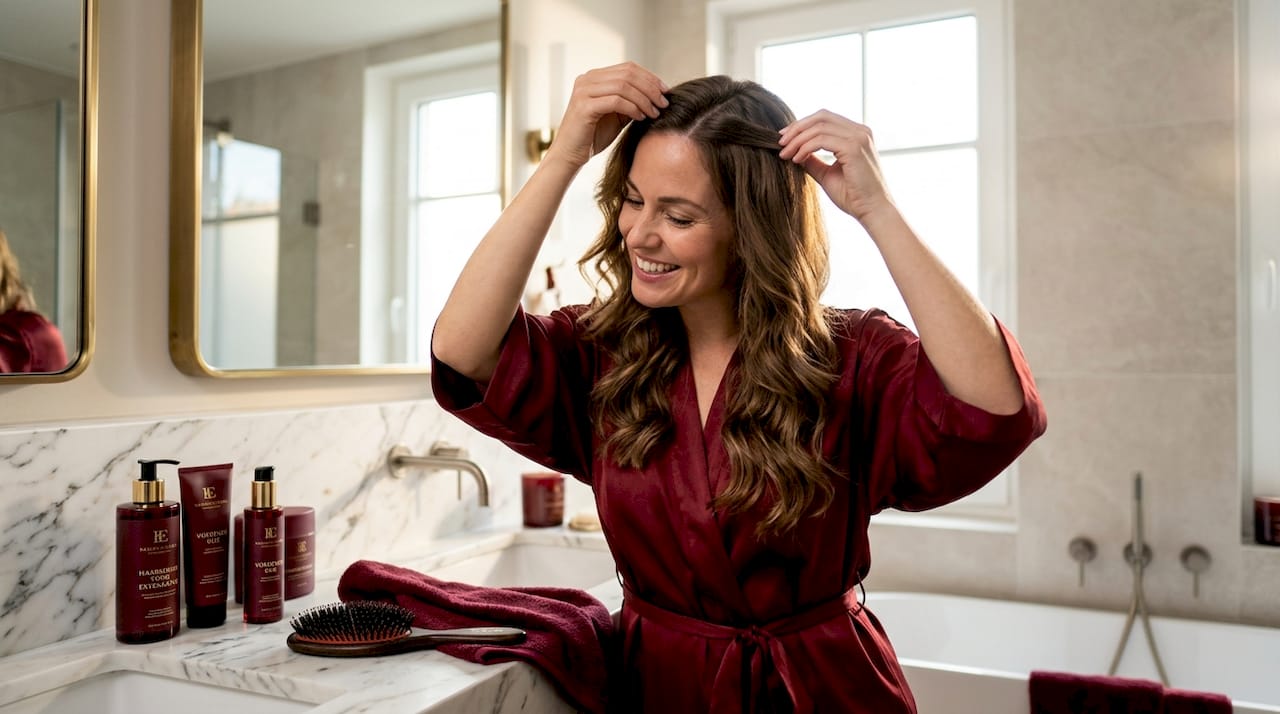
Not every extension method suits every hair type. Personal advice increases wearing comfort and prevents damage. The choice depends on the thickness of your hair, the condition, the desired length, and your daily routine.
Fine hair requires light extensions with a low gram weight so the attachment points are not visible. Thick or curly hair can handle more weight and may benefit from tape-ins or keratin bonds for a seamless result. Damaged or chemically treated hair always needs extra care. Consult a stylist before choosing a semi-permanent method.
Color matching is a step beginners often underestimate. Color matching works best on the lightest hair ends because hair is usually lighter there than at the roots. Prefer a slightly lighter shade rather than the exact same color as your root. This makes the result look more natural, even if your hair fades or is balayaged.
“The color of your extensions should match your hair ends, not your roots. That’s the secret behind an invisible transition.”
Use the free color matching from Capilli extensions if you are unsure about the right shade. Professional color advice prevents a mismatch that immediately reveals your look.
-
Fine hair: choose light clip-ins weighing 100 to 150 grams
-
Thick hair: tape-ins or keratin bonds for seamless integration
-
Curly hair: choose extensions with a similar texture or use heat to style
-
Synthetic hair: cannot be permed or styled with high heat
Pro tip: View the extension guide for your hair type from Capilli extensions for a detailed comparison by hair type and method.
3. Essential care tips for maintaining hair extensions
Proper care determines how long your extensions look beautiful and how healthy your own hair remains. Most beginners make mistakes when washing, brushing, or sleeping, which significantly shortens the lifespan of extensions.
Washing and conditioning
Use only mild, sulfate-free shampoo and apply conditioner only to the lengths, not on the attachment points. Frequent and aggressive washing damages the adhesion of tape-ins and dries out hair with keratin bonds. Wash your hair a maximum of two to three times a week and use lukewarm water.
Brushing and detangling
Brush your hair gently every day, starting at the ends and slowly working up to the roots. Never pull directly on the attachment points. Use a soft hairbrush or a special extension brush with flexible pins to reduce tangles without damaging the attachment.
Sleeping and protection
-
Braid your hair loosely before bedtime to prevent tangles and breakage
-
Never sleep with wet hair. Sleeping with wet hair increases the risk of hair breakage and irritation
-
Use a silk or satin pillowcase to reduce friction
-
Always apply heat protection before using a hairdryer, straightener, or curling iron
-
Protect your hair when swimming by wearing a swim cap or applying a leave-in conditioner before entering the water. Chlorine and salt water quickly damage the quality of extensions.
Pro tip: View the care tips from Capilli-extensions for a complete overview of recommended products and routines per extension type.
4. Warning signs and how to prevent hair damage
Extensions that are too tight or incorrectly applied can lead to traction alopecia. This is a form of hair loss caused by continuous pulling on the hair follicles. Traction alopecia is often reversible if symptoms are recognized and addressed early. If you wait too long, the damage can be permanent.
Recognize the following warning signs:
-
Pain or tightness on the scalp immediately after application
-
Redness, bumps, or irritation around the attachment points
-
A thinning hairline, especially at the temples and nape
-
Visible bald spots or hair breakage at the attachment points
-
Itching that lasts longer than two days after application
“Pain after applying extensions is not a normal side effect. It is a sign that something is wrong with the tension or weight. Always take this seriously.”
| Situation | Recommended action |
|---|---|
| Pain or tightness immediately after application | Return to the stylist for adjustment or removal |
| Thinning hairline | Stop wearing and consult a specialist |
| Redness and bumps | Remove extensions and treat the scalp |
| Hair breakage at attachment points | Check weight and method, switch to a lighter option |
Professional removal prevents unnecessary hair loss and damage to your natural hair. Incorrect removal causes tangling and extra hair loss. Never remove keratin bonds or tape-ins yourself without the right products and knowledge.
5. How to plan the application of hair extensions as a beginner?
A realistic plan and regular maintenance appointments are essential to prevent hair loss and irritation. Proper scheduling of application and follow-up appointments minimizes hair strain and extends the lifespan of your extensions. Use the checklist below as a guide for a worry-free start.
The beginner’s checklist for hair extensions
-
Examine your hair type and condition. Have your hair assessed by a stylist before choosing a semi-permanent method. Damaged hair needs repair first.
-
Choose the right method. Start with clip-ins if you are unsure. Only switch to tape-ins or keratin bonds once you know what you want.
-
Match your color correctly. Compare the extension color with your hair ends, not your roots. Use a color swatch or professional advice.
-
Buy from a reliable supplier. Choose 100% human Remy hair for the most natural look and longest lifespan.
-
Schedule the application appointment. Book with a certified stylist for tape-ins or keratin bonds. Ask about experience with your hair type.
-
Set up a maintenance schedule. Maintenance every 6 to 8 weeks for tape-ins and every 2 to 3 months for keratin bonds is recommended.
-
Get the right care products. Buy a sulfate-free shampoo, an extension brush, and a heat protection spray before you start.
-
Learn the correct brushing technique. Always start at the ends and work upwards. Never pull on the attachment points.
-
Plan removal in advance. Always have semi-permanent extensions removed professionally. Schedule the appointment when applying them.
-
Evaluate after the first wear period. Assess how your hair reacts to the extensions. Adjust the weight or method if needed.
Pro tip: For clip-ins, choose a weight that matches your hair thickness. Clips that are too heavy are visible and strain the hairline. For fine hair, Light clip-in extensions From 100 to 150 grams is the safest choice.
Key insights
The safest and most beautiful results with hair extensions come from choosing the right method for your hair type, consistently maintaining care, and never ignoring warning signs of hair damage.
| Point | Details |
|---|---|
| Start with clip-ins | Clip-in extensions are safe, easy to use at home, and ideal for beginners with no risk of damage. |
| Match color to hair ends | Choose a shade slightly lighter than your root color for an invisible, natural transition. |
| Use sulfate-free products | Mild shampoo and conditioner on the lengths significantly extend the life of your extensions. |
| Recognize traction alopecia early | Pain, redness, and a thinning hairline are signs to take immediate action. |
| Plan maintenance in advance | Refreshing tape-ins every 6 to 8 weeks and keratin bonds every 2 to 3 months extends their lifespan. |
What I really think after years of working with extensions
The biggest mistake I see beginners make is rushing. They choose the method that looks the most impressive on social media without considering if it suits their hair. Keratin bonds on fine, damaged hair are a recipe for disappointment. Clip-ins on thick, unruly hair without the right clips result in a visible, unnatural look.
What I’ve learned most over the years: your hair always tells you the truth. If it hurts, it’s too tight. If it breaks, the weight is too heavy. If the color is off, it’s immediately noticeable. The checklist in this article isn’t meant as a bureaucratic list. It’s a way to slow down and choose consciously.
I’ve seen women who never wanted to try extensions again after one bad experience. That’s a shame, because with the right method and care, extensions are one of the most beautiful ways to change your look without permanent intervention. Start small. Start with clip-ins. Learn how your hair reacts. Build from there.
Hair health always comes before aesthetics. A beautiful look that damages your hair is not a good look.
— Jantine
Premium hair extensions from Capilli-extensions
Capilli-extensions offers premium Remy hair extensions made from 100% human hair, ethically sourced and available in dozens of colors and lengths. Whether you’re starting with clip-ins or switching to tape-ins, the range offers a solution for every need. Customers rate Capilli-extensions an average of 4.8 out of 5, reflecting quality and comfort.
Unsure about the color? Use the free color matching for personalized advice. View the full range of hair extensions and find the extensions that perfectly match your hair and style.
FAQ
Which extensions are best for beginners?
Clip-in extensions are the best choice for beginners. They can be applied at home, require no professional installation, and are removable daily, which minimizes stress on your own hair.
How often should I wash my hair extensions?
Wash your extensions a maximum of two to three times a week with a sulfate-free shampoo. Washing more frequently shortens their lifespan and damages the adhesion of tape-ins.
Can I remove hair extensions myself?
You remove clip-ins yourself. Semi-permanent methods like tape-ins and keratin bonds should always be removed professionally. Incorrect removal causes tangles and extra hair loss.
How do I recognize traction alopecia from extensions?
Pain, redness, bumps around the attachment points, and a thinning hairline are the first signs. Stop wearing them immediately and consult a specialist if these symptoms occur.
How long do hair extensions last?
Clip-ins last one to two years with proper care. Tape-ins are refreshed every 6 to 8 weeks, and keratin bonds every 2 to 3 months, depending on hair growth and maintenance.